Sie sind nicht angemeldet.

  • MichaleSid

    EVE-Member

    Sie müssen sich registrieren, um eine Verbindung mit diesem Benutzer herzustellen.

Über mich

  • The iPhone 5 may be 6 years old at this point, but for many Apple fans this
    remains one of the greatest iPhone models ever built, and
    a genuine classic. Sadly, there’s a bit of bad (if predictable) news from Apple:
    According to the company’s latest update of "vintage" and "obsolete" devices, the iPhone 5 is now considered too old
    for Apple repairs. ] the first iPhone produced entirely under Tim Cook’s leadership, took what worked about the
    iPhone 4 and added to it. It was thinner and
    lighter, while also sporting a taller display that approached a
    9:16 aspect ratio.


    In terms of new features, the addition of LTE
    support stood out. Some folks were initially annoyed at the replacement of the 30-pin connector with the new Lightning charger, but we’re totally over that now!
    The official difference between "vintage" and "obsolete" largely comes down to differing legal requirements around the world, where laws
    require differing levels of support for older products.
    For most places, however, these terms are largely interchangeable in terms of what it actually
    means for customers. Unfortunately, with the abandonment of the
    iPhone SE, this has been a bit of a sad year for fans of
    the iPhone 5 form factor. While the iPhone 5s,
    5c and iPhone SE will be supported for repairs for a bit
    longer, this is one more step toward the end of the road for one of the greatest ever
    iPhone designs.


    The logos are not visible to the consumer. She said that she
    buys screens that are mixes of original, refurbished, and aftermarket parts because she believes that the
    original flex cable is of higher quality than aftermarket
    ones. "The parts I buy have an original flex on it because that’s what’s best for my consumers," she said.
    "It’s difficult and pointless to erase the existing Apple logo that’s printed on a tiny piece of flex. There’s no customer-facing Apple logo, no logo anywhere on the glass. It’s smaller than a grain of rice. There is no clear definition of what makes an Apple part "counterfeit," which is the question at issue here.


    ] on so called ‘parallel imports’ or ‘gray market’ goods, in which both the goods and the marks are genuine, but which are sold outside of the trademarks owners authorized distribution channels," the DOJ’s criminal resources manual states.
    Jones spends much of her time staring at the inside of iPhones through a microscope.
    She and a select few others were instrumental in identifying the cause of "touch disease," a defect in the iPhone 6 that caused them to lose touch functionality.
    Other iPhone repair shop owners have had iPhone shipments seized—and, in some cases,
    their shops raided—but Jones is the highest-profile independent repair shop owner
    to run into trouble with DHS.


    She’s often quoted by the media (including Motherboard), and last week she appeared on Good Morning America to talk about the dangers of counterfeit Lightning charging cables,
    which can damage iPhones if they’re of low quality.
    She’s also been tapped by lawyers to serve as an expert witness in cases involving iPhone
    repair and design. Defect is epidemic." Apple’s lawyers cast her testimony as unreliable. "Jones is not qualified to offer
    opinions about the cause of the alleged touchscreen issue.
    Dr. Jones is a molecular geneticist, not an engineer," Apple’s lawyers argued in a court filing. The judge in that case decided not to certify the class earlier this week. Jones is an outspoken member of the "right to repair" movement, which seeks to pass state laws that would require manufacturers to sell repair parts and tools and to make diagnostic information and devices available to third parties.


    Basically, they want people to be able to repair their own stuff. Last week, Jones and others in the movement held a press conference and lobbying day at the New York state capitol in Albany pushing for a right to repair law in the state. Jones has also spoken out about Apple’s repair policies on her YouTube channel, which has 65,000 subscribers. Bowker added that DHS often checks with manufacturers (including Apple) after items are initially detained to seek advice on whether to formally seize them, but was not sure if that happened in this case. Though Apple is rarely involved in any specific seizure, according to Bowker, many large companies—including Apple—tell CBP what types of products should be seized. Apple declined to comment on the record for this article.


    The ever-present threat of having parts seized by DHS is an ongoing worry in the independent phone repair community and sourcing reliable parts that won’t be seized by customs is a regular topic of discussion among repair shop owners. Shop owners say that once one shipment is seized, future ones are more likely to be seized, too. Kyle Wiens, CEO of iFixit, told me. Last year, I went to Jones’s repair shop, iPad Rehab, to sit in on one of her microsoldering classes. People from around the world had flown into the small town of Mendon (population: 9,000) to learn how to fix touch disease and other common problems that afflict iPad and iPhone logic boards.


    During my short visit, iPad Rehab appeared to be one of the only bustling businesses in town. "If I look around, there’s
    a whole lot of for-rent signs," Jones told me at the time "It’s hard to have a business in a tiny little quaint town. We are
    in the space of a drug store that was here for 150
    years and went out of business, at the corner of a tiny town with one stoplight.
    Throughout the day, locals came in to get their batteries replaced and screens fixed.
    ] screens could have been a Christmas bonus for people on my team or a
    discount for the people who walk in the door is infuriating and unfair," she said. "The town loves us and wants
    to thrive.


    Raleigh, N.C. — Testers at Consumer Reports tried several
    "DIY" screen repair kits to see if they actually repair cracked phone screens.
    For many people, paying to get their screens repaired just
    isn't worth it. Bree Fowler, a tech editor at
    Consumer Reports. 50 each using repair kits
    -- but she warns it takes a lot of patience and some skill
    to fix your own screen. First, users have to
    remove the screen and disconnect the home button, camera, sensors and
    microphone. DIY kits also ask users to melt adhesive with a hair dryer
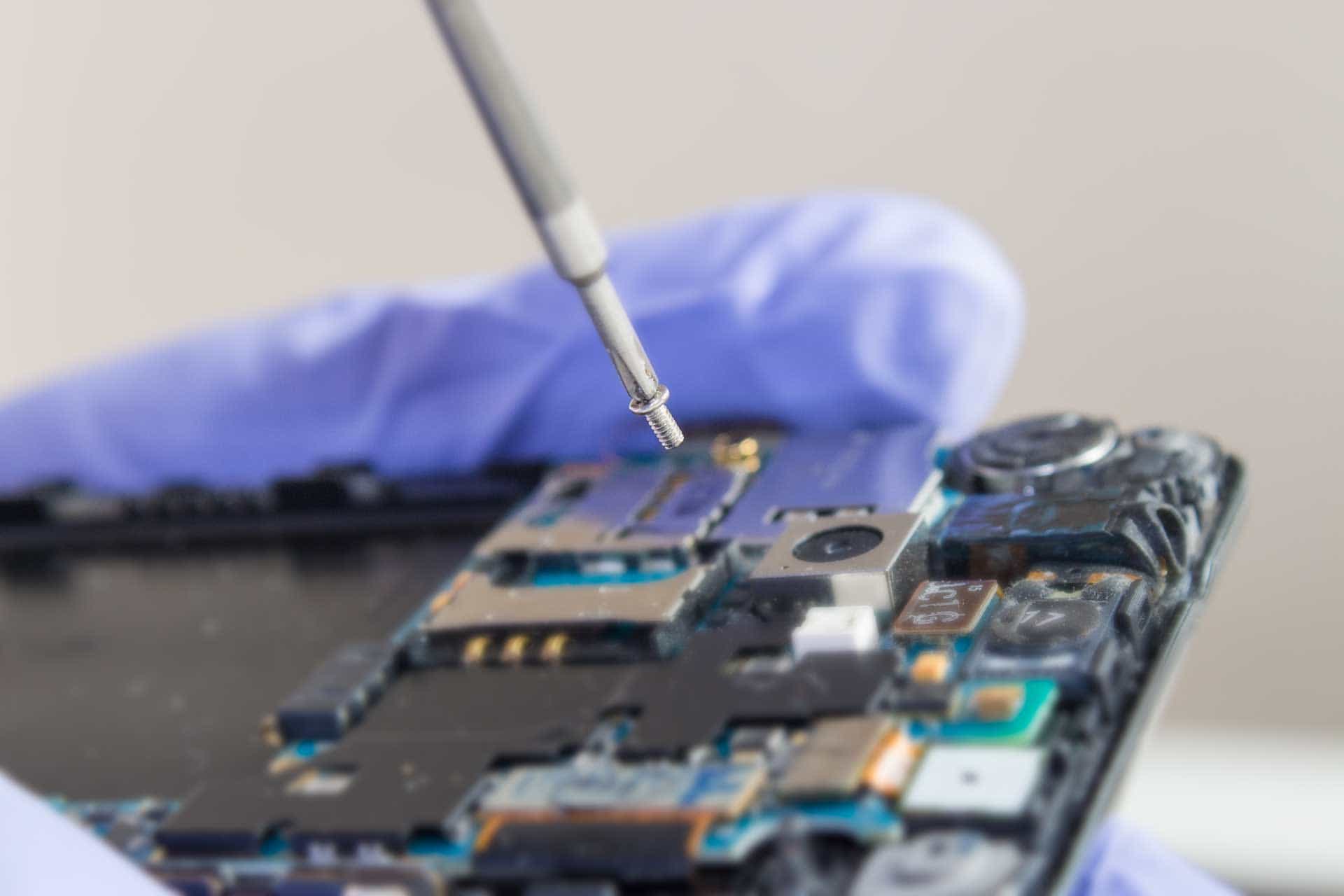
    without damaging the phone. According to Fowler, the worst part was dealing with tiny screws.
    After the fix, Fowler's phone worked -- but it now has a dark, shadowy
    image in the upper left corner of the screen. Fix your screen at your
    own risk! It can save you money if you're up for a challenge.


    It’s a common issue, not damage. Their answer: pay us!
    Apple doesn’t support its products or customers.
    Apple I upgraded my Iphone 7 to IOS 12.1 - it just stopped
    working, does not work speaker, microphone, does not make calls,
    I do not hear anything. It was u updated the software to 12.1 and stoped everything.
    AppleSupport @AppStore you guys have some shaddy gray policies about your products.
    I have an iphone 7 Plus with a grayed out microphone, issue wich
    applies for a recall product, i went to an apple store and
    they told me I have to pay 475 usd to get it solved.


    Vodafone Idea has just announced a new offer under which postpaid subscribers will be able to avail cheaper iPhone repairs and
    90GB of monthly data. As per the new offer, all Vodafone RED and Idea Nirvana subscribers with monthly bills of Rs.
    649 or above will be eligible for the iPhone Forever Programme which will bring down the
    iPhone repair cost for all the registered users.

    Vodafone's
    new Rs. 649 postpaid plan has been launched while the company has also introduced the iPhone
    Forever Programme for Idea Cellular subscribers.
    Meanwhile, Vodafone's new Rs. 649 postpaid plan comes with unlimited local,
    STD and roaming voice calls, 90GB of data, 100
    SMS per day and validity of one month. Users will also
    get data rollover facility up to 200GB and a free one-year subscription to a popular online video streaming service.

    On the other hand, Idea Cellular also has a Rs.


    649 postpaid plan which also comes with similar benefits apart
    from the free one-year subscription to a popular online video streaming service.
    While all users who have subscribed for postpaid plans valued at Rs.
    649 per month or more from Vodafone RED and Idea Nirvana will
    be able to get their iPhones repaired for just Rs.
    2,000 plus GST as the service handling fee.
    Moreover, the said subscribers can also avail exclusive buy-back
    offers while upgrading their iPhones. Also read:
    Vodafone Rs. As part of the new offer from Vodafone Idea, iPhone 5S and newer purchased from an authorised retailer in India will
    be eligible for the iPhone Forever Programme. While iPhones
    which are less than 18 months old will be eligible for replacing, repair and upgrade,
    all the iPhones older than 18 months will be eligible for repair and upgrade.
    In order to avail this offer from Vodafone Idea, you
    will need to download the iPhone Forever app from
    Apple’s App store and register yourself.


    Here is an interesting turn for Apple. According to iGeneration, iPhones with 3rd party batteries are now
    eligible for authorized repair. Previously, all Apple Authorized Service Providers (AASP)
    and Genius bar employees have instructions to deny service to these
    iPhones. Now new instructions say that repairs can go ahead to any iPhone component even if
    the battery is non-Apple. If the battery itself is
    the issue, the instructions state that the repairer has
    to drain it to less than 60%. Only then can a genuine Apple battery installation happen, for a standard fee.
    When Does This New Apple iPhone Repair Policy Kick
    In? The new guidelines will begin today, March 7, and applies worldwide.

    Despite relaxing the requirement on 3rd party batteries, Apple will still decline service for those with other 3rd party components.
    This includes logic boards, enclosures, microphones, Lightning connectors, headphone
    jacks, volume and sleep/wake buttons, TrueDepth sensor arrays,
    and other internal components. The last time Apple
    had a major change in iPhone fix policy was back in 2017.

    When iPhones with 3rd party screen repairs were made eligible for authorized repair.
    As long as the fix necessary was not the screen itself.


    This week, Apple decided to relax the rules surrounding the eligibility of an iPhone for repair at either a Genius Bar or Apple Authorized Service Providers (AASS).

    Before now, third-party batteries installed in an iPhone
    meant repair wasn't allowed, however, the policy has
    now been changed. As MacRumors reports, new guidance has been sent out from Apple informing both Genius Bar staff and AASS outlets that a third-party battery should no
    longer stop a repair being offered. Repairs to all the major components within the iPhone can be carried out for
    Apple's standard fees, with the only prerequisite being that
    the unofficial battery be drained to below 60 percent before a repair commences.


    The new rules extend to the battery itself, with Apple allowing a damaged third-party battery
    to be replaced with a new, official one for the standard battery replacement fee.
    If the iPhone battery tabs are damaged or there's "excessive adhesive," Genius Bar
    staff or AASS employees can decide to replace the iPhone while
    only charging the battery replacement fee. This decision is left to the
    discretion of the service representative. Although Apple is relaxing the rules around batteries, the same is not true of other major components including the logic board, enclosure, microphone, Lightning connector, headphone jack, volume and
    sleep/wake buttons, and TrueDepth sensor array.


    If any of those are third-party replacements then a repair will be refused.
    Has Apple Quietly Fixed Flexgate on 2018 MacBook Pros?
    Has Apple Quietly Fixed Flexgate on 2018 MacBook Pros? One final bit
    of good news: the policy update covering third-party batteries
    is worldwide, so wherever you live in the world as long as
    there is a Genius Bar or AASS local to you these
    new rules should apply. If you're wondering why Apple decided to change this
    long-standing policy, the most obvious reason is the cheap
    battery replacement programs that ran last year. 29 battery, but it wasn't just Apple
    offering cheap batteries. Fixit matched the offer and
    has since extended it well beyond the end of Apple's end date.
    That's a lot of iPhones with third-party batteries Apple must
    have realized it couldn't repair due to a policy it could
    easily change, so it did.


    The iPhone is a communication device
    but how sophisticated it is, it’s not
    really free of problems. This article is intended for every iPhone user who has or is having problem of
    iPhone crashed in recovery mode or dropped iPhone
    in water. For iPhone users, it is common to see situations in which the device is locked in recovery mode.

    This status is used to solve operating problems by updating or restoring the device.
    However, if any errors occur during the process, the iPhone will be locked in recovery mode showing the iTunes logo
    and will prevent the device from restarting.


    In most cases, if your iOS device gets locked into recovery mode, you can remove it in this way using iTunes.
    The process is quite easy and can be done by any user.
    First, with iPhone connected to the computer you need to run iTunes.
    The Apple program will detect that the device is in recovery mode and will display a window in which you will be prompted to restore your device in order to use
    it with iTunes. Just click "OK" and use the device restore option through iTunes to troubleshoot the issue.
    However, it is important to mention that this method can cause data
    loss. ITunes may restore using a previously made backup, but all files and
    data generated after the backup will be lost.


    If you decide to set it as a new device, the data loss will not
    be partial but total. To avoid this loss of data, the alternative is to use a program that specializes in iPhone repair.
    If you want to avoid partial or total loss of data while unlocking the iPhone or simply could not complete the process with iTunes, the recommended alternative is to use a
    specialized program, such as Aiseesoft iPhone Data Recovery.
    The program allows you to repair various iPhone malfunctions, including locking
    in recovery mode, without losing your device data. Anyway,
    the company advises to make backups frequently in a preventive way.


    The solution is easy, just connect the iPhone to the computer and
    run Aiseesoft iPhone Data Recovery. After that, you need to click "Recover iOS system" and
    then click "Start". The program will detect if the iPhone is in normal mode or has an error.

    If the device needs to be repaired, as is the case when it is locked in recovery mode, a results screen will be displayed and the
    user will have to confirm if he wants to correct the error.
    After confirming clicking "Repair", the program will download the repaired firmware and restore
    the iPhone. You have to wait for the program to finish the process and automatically restart the iPhone.
    After the restart, the repair has already been completed and the device returns to its normal state
    with all the data it contained.


    The people have spoken, and they want their phones to last.

    And across the nation, elected officials are proposing a type of legislation that
    would give consumers more power to fix their devices as they age or
    are damaged. Over the past two years, these "right to repair" bills have gained
    popularity. A right to repair bill is quite simple: It requires electronics-makers to provide
    diagnostic and repair information to consumers, as well
    as parts and equipment needed to make repairs. Championed by the Repair Association, a
    consumer advocacy group, the bills are largely modeled after the Automotive Right to Repair Law, which passed in 2012
    and helped democratize auto repair. Device-makers such as Apple make their products nearly unhackable—if you’ve ever tried to repair an iPhone yourself, you’ve
    likely encountered a series of barriers ranging from proprietary screws to layers of glue holding internal components together.


    While such laws wouldn’t dictate how manufacturers construct their products, it would give device owners the option to have their device repaired at the shop of their choice, or to
    repair it themselves. Potential benefits of such
    legislation include reduced electronic waste, an end to "planned obsolescence," and boosted local economies as individuals head to local businesses for repairs.

    "People shouldn’t be forced to ‘upgrade’ to the newest model every time a replaceable part on their smartphone or home appliance breaks," Mark Murray,
    executive director of Californians Against Waste, said in the announcement of the California
    bill. While companies such as Apple—undoubtedly a target of this legislation—support
    a variety of environmental and sustainability programs, they’ve opposed this kind of legislation in the past, often arguing that self-repair could be dangerous to consumers.


    In particular, they say incorrect disassembly and repair techniques could cause a phone’s lithium-ion battery to catch fire.
    In other cases, industry lobbyists purported that
    broken glass could pose a danger to those wanting to repair their own mobile devices.
    A 2016 right to repair bill in New York, one of the first in the country,
    stalled before eventually petering out of existence. Effective
    lobbying trumped public and bipartisan support for the bill, and
    it never reached the floor for a vote. The same fate has met a number of similar bills in other
    states. The growing demand for these right to repair laws is a sign that mobile technology is maturing.
    In the earlier days of the iPhone, it made sense to buy a new one if your phone broke.


    If it was more than a year old, the new model was significantly faster,
    had a higher quality display, and included new must-have software features.
    If it was more than two years old, your cellular provider would subsidize the cost of an upgrade, too.
    Over the past few years, those hardware upgrades have been more subtle, and the software updates less compelling.
    That, paired with rising smartphone costs, has led to consumers holding onto
    their phones for longer. However, those with older phones have
    often reported that they get slower with age.
    While degrading components are a factor, a common theory—particularly among iPhone owners—was
    that Apple purposely included software updates that would slow down older phones,
    thus forcing consumers to buy a new one out of sheer frustration.


    In December, it came to light that Apple was intentionally throttling
    the performance of older iPhones in order to preserve battery life.
    Apple apologized for the behavior and then went a step further:
    It announced that in a future iOS update, iPhone owners would be
    able to turn this "feature" on and off. It’s the type of transparency and control
    that owners have come to expect. Even so, the debacle drew widespread criticism and inspired more
    than two dozen lawsuits against Apple. Now, as California Rep.
    Susan Eggman introduces her take on right to repair legislation, the
    smartphone industry is in a far different place than even two years ago, when the first states introduced this kind of bill.


    With vested public interest—as well as California’s existing attitude toward repair laws—it could get more serious consideration. A right to repair law doesn’t have to be bad news for a company.
    It could instead be an additional avenue of revenue: On top
    of your AppleCare warranty plan, you could purchase various manufacturer-approved repair kits
    for your device. Apple’s retail stores already house a number of talks, introductory sessions, and how-tos—why not add repair classes
    to the calendar? Teaching kids and adults the basics of electronics repair could even inspire an interest that leads
    individuals to pursue eventual careers in STEM. Hardware-makers used to have the upper hand.

    In today’s climate, that’s less certain. Consumers want to save money and repair their devices as
    needed instead of unnecessarily ponying up for a new
    one. Right to repair laws could help perpetuate that trend.


    In a change to its longstanding policy, Apple is apparently repairing
    iPhones with third-party batteries at its Genius Bars and
    Apple Authorized Service Providers. This is a about-face from its previous
    stance, which was to refuse repairs on iPhones with aftermarket batteries.
    According to MacRumors, which saw a copy of Apple's internal memo regarding the change, if
    a repair is unrelated to the battery, Apple will now ignore the battery and proceed as normal.

    If the repair is related to the battery, Apple may replace it with an official Apple battery
    for the standard fee. And, if the iPhone's battery tabs are missing or the third-party battery is stuck in place, Apple's geniuses have
    the option to replace the entire iPhone for the cost of a battery replacement, at their discretion of course.
    In 2018, Apple reportedly replaced 11 million iPhone batteries.


    29 battery replacement program, which was an attempt to make up for
    slowing older iPhones to balance performance and battery life.
    One might assume that plenty of iPhone customers sought out third-party batteries and now they're
    turning up in greater numbers at Genius Bars.
    Or, maybe Apple is just becoming more flexible. After all, last month, the company announced third-party iPhone screen repairs would no longer void warranty coverage.
    So far, Apple has kept quiet about the change, but 9to5Mac reports
    that employees and government officials in France (where the news first broke) have expressed concern that handling third-party
    batteries may come with increased safety risks.

    My web page; cellphonecityrepair.com

Persönliche Informationen